|
thebigtower |
|
|
|
|
|
st hilary |
|
|
|
|
|
|
|
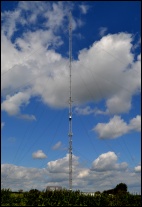
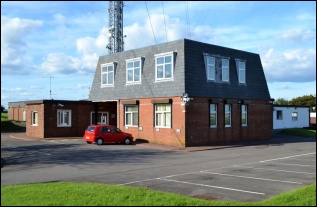
THE ST HILARY TRANSMITTER is the site of the first Independent Television Authority (ITA) station in Wales, broadcasting ITV to South Wales and the West of England on 405-line VHF from 1958 to 1985. It currently transmits regional FM and DAB radio services and also serves as an area base for Arqiva engineers. DAB transmissions from the station include Nation Radio (South East Wales multiplex) who also have their studio based on site, whilst their FM transmission comes from the Wenvoe UHF main station located around five miles to the east. |
|
|
|
|
|
|
|
|
|
|
|
|
|
|
|
|
|
|
|
|
|
|
|
|||
|
|
|
|
|
|
|
|
|
|
|
STATION HISTORY |
|
WALES AND WEST OF ENGLAND SERVICE |
|
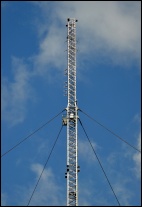
The Independent Television Authority (ITA) constructed the St Hilary station to provide Independent Television (ITV) coverage on 405-line VHF Band III to South Wales and the West of England, an area stretching principally from Swansea in the west to Bristol and Bath in the east and centred around the Welsh capital of Cardiff. The transmitter would also cover Somerset and the North Devon coastline, creating an overall service area that was basically U-shaped due to the ingress of the Bristol Channel. This was the authority's fifth transmission area with St Hilary its sixth transmitting station. The preceding stations at Croydon and Lichfield respectively served London and the Midlands, Winter Hill and Emley Moor covered Northern England, whilst Black Hill served the Central Belt of Scotland. South Wales and the West of England was also the fifth transmission area for BBC Television, the corporation broadcasting to it from their high-power VHF Band I transmitter at Wenvoe, to which St Hilary was closely sited in accordance with established practice. VHF Band I, although not infinite in its ability to cover a large and geographically diverse area, did enable the BBC to serve the Wales and West region from Wenvoe with comparative ease. For the ITA however this was typically more of a challenge using VHF Band III, the constraints of which would impede coverage across some hill-shielded parts of the Welsh valleys to the north, as well as around Bath on the eastern extremity (although both these areas stretched Band I capability as well). An additional hindrance was the height limitation placed on the St Hilary mast due to the station's proximity to Cardiff's Rhoose Airport. The ITA wanted to deploy what would have been their first 1000-ft (306m) mast but, having fended off outright objections to a second television mast in the airport vicinity, they were granted approval by aviation authorities subject to a height limit of 750-ft (228m). The immediately preceding station at Black Hill was the first ITA site to use a stayed mast and this combined lattice steel construction with a square cross-section. The St Hilary mast repeated this design but, starting with the next station at Chillerton Down, all subsequent ITA lattice masts would be their preferred triangular cross-section. St Hilary entered full service on 14 January 1958 transmitting on VHF Channel 10 (vertically polarised) with a maximum Effective Radiated Power (e.r.p) of 200kW (vision) from a transmitter with an actual maximum power of 20kW. The ITV franchise holder for the area was Television Wales and West (TWW) operating from studios in both Cardiff and Bristol. Overall, the quality of service from St Hilary was excellent and mostly replicated Wenvoe in coverage but with some of the predicted caveats, particularly across the valleys where signal penetration did in some places prove inferior to the BBC Band I transmission. Without the barrier of natural obstacles, the St Hilary signal easily reached across the Bristol Channel to Somerset and the North Devon coastline. Additionally, fringe reception was obtained as far as Pembrokeshire in the west, Gloucestershire and Wiltshire in the east and Dorset to the south east. |
|
|
|
|
|
|
|
|
|
WELSH SERVICE |
|
Within the confinement of a single channel, some sub-regional programming was provided (including some in Welsh) but often with the effect of pleasing no one. What was deemed inadequate in one area was an annoyance in the other. As far as a dedicated Welsh ITV service was concerned, this had been provided to West and North Wales from September 1962 by way of the short-lived Wales West and North (WWN) franchise based on the Presely, Arfon and Moel-y-Parc transmitters. The financial failure of this company in January 1964, due in large part to the delay in bringing Arfon and Moel-y-Parc into service, led to a buyout of the territory by TWW. This provided the justification to consolidate the two areas by extending the Welsh service to those parts of Wales covered by St Hilary, in the process allowing the transmitter's existing Channel 10 service to more or less dispense with the Welsh language output. The BBC had already taken the lead on this by launching their own separate Welsh service on Band III from Wenvoe in February 1964. VHF Channel 7 was authorised for use by the Welsh ITV service from St Hilary and for this the ITA installed a directional vertically polarised transmitting aerial on the mast, but with the main Channel 10 aerial occupying the top section and with no option for height extension, the Channel 7 aerial had to be mounted 20 metres (65-ft) below Channel 10. Tied with this restriction, only a higher power (minimum 250kW e.r.p) would compensate but, knowing this would be ruled out on the grounds of co-channel interference considerations, ITA engineers could aim only to replicate Channel 10 coverage as near as possible and whilst around 150kW seemed feasible, only 100kW was approved. - half the power of Channel 10. Combined with the reduced aerial height, the most negative impact would be upon the valley areas where Channel 10 reception was already diminished by the limitations of Band III propagation. Nevertheless, this provided the ITA the best means to provide a Welsh language service to the area, plus the Channel 10 service would remain available and include some content for Wales. The Channel 7 Welsh ITV service from St Hilary commenced on 15 February 1965. RELAYS |
|
The ITA eventually remedied the main reception issues by providing three relay stations. The first was opened at Bath on 13 May 1968, transmitting on Channel 8(H) and improved the St Hilary Channel 10 service to that area. This was on the site of the BBC1 405-line VHF Band III relay opened the previous year but planned from the outset to accommodate the ITA. This was followed by ITA-built stations at Abergavenny (from 23 April 1969) on Channel 11(H) and Brecon (from 30 April 1970) on Channel 8(H) which boosted reception of St Hilary Channel 7 across the valleys. Thereafter, both BBC and ITA resources were concentrated on building the substantial number of UHF relays this area would require. |
|
|
|
|
|
|
|
|
|
|
|
|
|
|
|
|
|
|
|
|
|
|
|
|
|
|
|
|
|
UHF 625-LINE COLOUR |
|
The BBC/ITA co-siting agreement for colour transmission resulted in Wenvoe becoming the base for UHF services in South Wales whilst the new UHF main station at Mendip in Somerset was built to serve the West of England. This left St Hilary excluded from direct broadcast of UHF and with the ITV franchise for its area changing hands from TWW to Harlech (HTV) in May 1968, the transmitter would provide the new colour-era company with just the 405-line service. However, as the main ITA site in the region, St Hilary became the base for the area Colour Control Room (CCR), one of fourteen set up nationwide by the authority as monitoring centres for the network of transmitters that was rapidly expanded by UHF. The remit of the St Hilary CCR and its engineers was the remote control and maintenance of all ITA transmitters in the Wales and West region, including the UHF-Colour transmitters at Wenvoe (Channel 41) and Mendip (Channel 61) which respectively entered service on 6 April 1970 and 30 May 1970. In 1981, the Independent Broadcasting Authority (IBA) replaced the CCR at St Hilary with the Regional Operation Centre (ROC), which utilised advances in remote monitoring technology to enable the original fourteen CCRs to be centralised into just four ROCs, the others being located at Croydon, Emley Moor and Black Hill. This model of operation was replicated by the BBC Monitoring and Information Centre (MIC) with their Wales and West operation located at Wenvoe. END OF 405 LINE VHF |
|
The Welsh service from St Hilary on Channel 7 ended transmission in January 1984 (simultaneously with Arfon), the BBC having ceased their Channel 13 Welsh service from Wenvoe one year earlier. The main Channel 10 service from St Hilary continued until the nationwide shutdown of 405-line in January 1985. The two relay stations at Abergavenny and Brecon had ended 405-line transmission in 1982, by which time both sites were also broadcasting UHF as relays of Wenvoe. The Bath transmitter became the first UHF relay of the Mendip main station in 1971 and ended 405-line transmission on 4 January 1983. POST-405 |
|
There were no other broadcast services from St Hilary when 405-line closed completely, leaving the mast vacated of all aerials once the Band III systems were removed. The station remained unused for broadcast until the start of Real Radio (now Heart FM) and the South East Wales DAB multiplex on Block 12C in October 2000. The South West Wales DAB multiplex (Block 12A) was added in January 2004. The Regional Operation Centre (ROC) functions were all subsequently centralised to Emley Moor although a local engineering and maintenance presence has remained at St Hilary. |
|
|
|
|
|
|
|
Location: |
St Hilary Down, Cowbridge, Glamorgan, CF71 7DP |
Grid Reference: |
ST026741 |
|
Landlord: |
Arqiva (Legacy: ITA/IBA/NTL Broadcast) |
Ground Height: |
126m |
|
BBC Region: |
N/A |
Mast Height: |
227.1m |
|
ITV Region: |
HTV (405-line VHF - ceased January 1985) |
Aerial Height: (*) |
222m |
|
|
UHF Tx Number: |
N/A |
|
|
|
|||
|
(*) Aerial Height for VHF Band II (Heart FM) above ground level |
|||
|
|
|
CURRENT TRANSMISSIONS |
||||||||
|
|
|
|
|
|
|
|
||
|
Digital Radio Multiplexes |
|
|
|
Analogue Radio (FM) |
||||
|
|
|
|
|
|
|
|
|
|
|
South East Wales (Block 12C) |
|
Service: |
(MHz) |
(e.r.p) |
||||
|
Swansea (Block 12A) |
Heart FM: |
105.4 |
4.9kW |
|||||
|
|
|
|
|
|
|
|
||
|
|
|
|